
Stepping Into the Next Generation of Farm Leadership with Rad McDavid
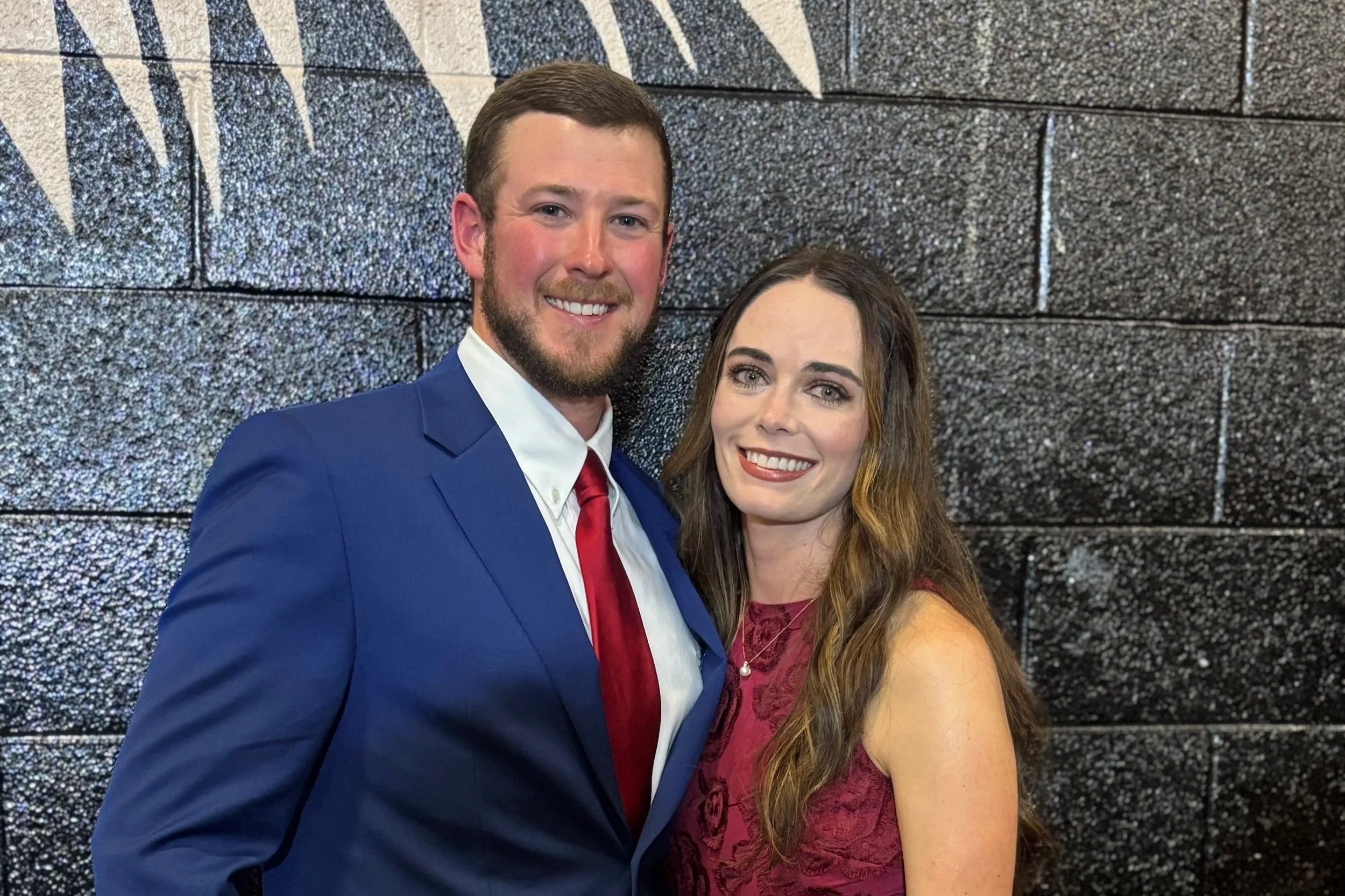
Rad McDavid and his wife Madison.
For Rad McDavid, stepping into running the family farm hasn’t been about reinventing the wheel. It’s been about building on a strong foundation his Dad set and making it work in today’s farm economy.
As a third-generation farmer in Obion County, Rad and his wife live on the farm where he recently transitioned into running full-time. As he takes on this role, he’s balancing legacy with new technology, a business mindset, and the realities of today’s agricultural climate.
In addition to farming, Rad serves as a board member of the Tennessee Corn Growers Association, representing fellow corn growers on issues that shape the future of Tennessee agriculture.
We sat down with Rad to talk about transitioning the farm, lowering input costs, and getting involved in your community.
Q: Tell us about your farm and what you grow.
Rad:
I’m a third-generation farmer here in Obion County. My wife and I live on the farm, and we grow corn, soybeans, and wheat.
We’ve pretty much always grown corn and soybeans. A long time ago, we grew some cotton, and we’ve dabbled in grain sorghum when the market made sense. But corn and beans have always been the backbone of what we do.
Q: What did transitioning the farm look like?
Rad:
I’ve been blessed in that my dad had a lot of forethought. I drove the tractor by myself when I was nine years old. He trained me not just on the manual side of agriculture, but on the business side too.
Little by little, he gave me more responsibility. He pushed me to rent some ground of my own, manage that myself, and apply what he’d taught me. That gave me a chance to prove myself while still working alongside him.
We fully transitioned the financial side of the operation recently. My dad is retired, but as most farmers do, he still comes and drives the tractor, but he doesn’t have to worry about the day-to-day anymore.
We planned for that transition regardless of what the year looked like. Last year wasn’t the greatest year economically to make that shift, but because we had planned ahead, it worked out well.
Q: What’s been the most rewarding, and the most challenging part of stepping into this role?
Rad:
The rewarding part is managing an operation that’s been handed down through our family. Growing crops not only to support your family but to help feed America - that’s one of the most rewarding things you can do.
The challenging part is the farm economy right now. We’re trying to transition an operation in what I’d call a failing farm economy. Input costs are high, margins are tight, and you’re trying to cut expenses while still maintaining productivity.
That’s the reality of stepping into leadership today. It’s not just about maintaining what you inherited, it’s about making it work in a tougher environment.
Q: What’s been the most rewarding, and the most challenging part of stepping into this role?
Rad:
My dad always instilled in me to keep learning and keep trying something new.
You’re not always going to win. Those new ideas won’t always pay off. But there’s something you can learn from everything you do.
You can’t sit stagnant and say, “This is how we’ve always done it.” That mindset won’t carry you forward.
Q: You’ve taken a deep dive into analyzing your input costs. What prompted that?
Rad:
It started with conversations with other farmers. We’ve got a great farming community here, and you learn pretty quickly that there may be better ways to do things than what you’ve always done in your own operation.
When margins tightened, I knew we needed to lower input costs wherever possible. So I sat down and looked at every input. What I was buying, where I was buying it, and whether I could maintain quality while reducing price.
It led to a lot of learning. And through that process, we were able to reduce input costs by 20 to 30%.
Q: Do you think that kind of strategic thinking is critical for the next generation of farmers?
Rad:
I think it’s absolutely critical.
Even for someone who was blessed into a strong operation, it’s still a struggle to maintain profitability with today’s input costs.
We deal with a lot of money moving in and out of our operations. Not because we’re making a lot, but because it takes a lot to operate. If you’re not running it like a business – if you’re not watching profit margins and protecting your return on investment – you’re going to go backwards.
Q: You’re heavily involved outside of the farm. Why is that important to you?
Rad:
I grew up in one of the best communities a person could grow up in. I’ve been helped not just by my family, but by a lot of the people in this community.
In addition to serving on the Tennessee Corn Growers Association board, I also serve on the Obion County Farm Bureau board and the UT Martin Agriculture Advisory Committee. I’m also heavily involved in my church and serve on a couple of community boards.
Strong communities don’t happen by accident. They happen because people are willing to give back. I’ve seen that growing up, and I want to be one of those people.
Q: You played a role in creating the Tennessee Corn Growers Policy Book. Can you explain what that is and why it matters?
Rad:
The Policy Book is basically our guiding document. It lays out where Tennessee corn growers stand on issues that affect us.
It helps us present clear, consistent information to legislators about what will improve how we farm and how we compete. It keeps Tennessee farmers moving forward in what we want to be a thriving industry.
Q: What issues do you think are most important to Tennessee corn growers right now?
Rad:
Ethanol is a big one. Especially increasing E15 year-round at the pump.
Demand in general is critical. We need all the demand we can get to support corn prices.
On the other side of the equation are input costs. Fertilizer pricing is something we’re watching closely. Anything we can do to lower input costs and help Tennessee farmers compete in a global market is going to be important.
Q: What would you say to farmers who feel too busy or unsure about getting involved?
Rad:
The first step is the hardest.
Putting yourself out there to join an organization or even just call your state or federal leadership can feel intimidating, but it’s not as scary as it sounds.
The more unified our voices are, the stronger agriculture in Tennessee will be. We work better together.
I’d encourage anyone who’s hesitant to take that first step.
Want more stories like this?
Get the latest Tennessee corn farmer features, updates, and insights delivered to your inbox. Sign up for our newsletter to stay connected with what’s growing at Tennessee Corn.
About the Tennessee Corn Promotion Board
The Tennessee Corn Promotion Board (TCPB) works on behalf of Tennessee’s corn farmers to invest checkoff dollars in research, market development, education, and promotion. Through these efforts, TCPB helps ensure a strong future for corn production across the state, while connecting the value of corn to consumers, livestock producers, and the industries that rely on it.