
Planning for the Next Generation with Board Member Robert Thompson
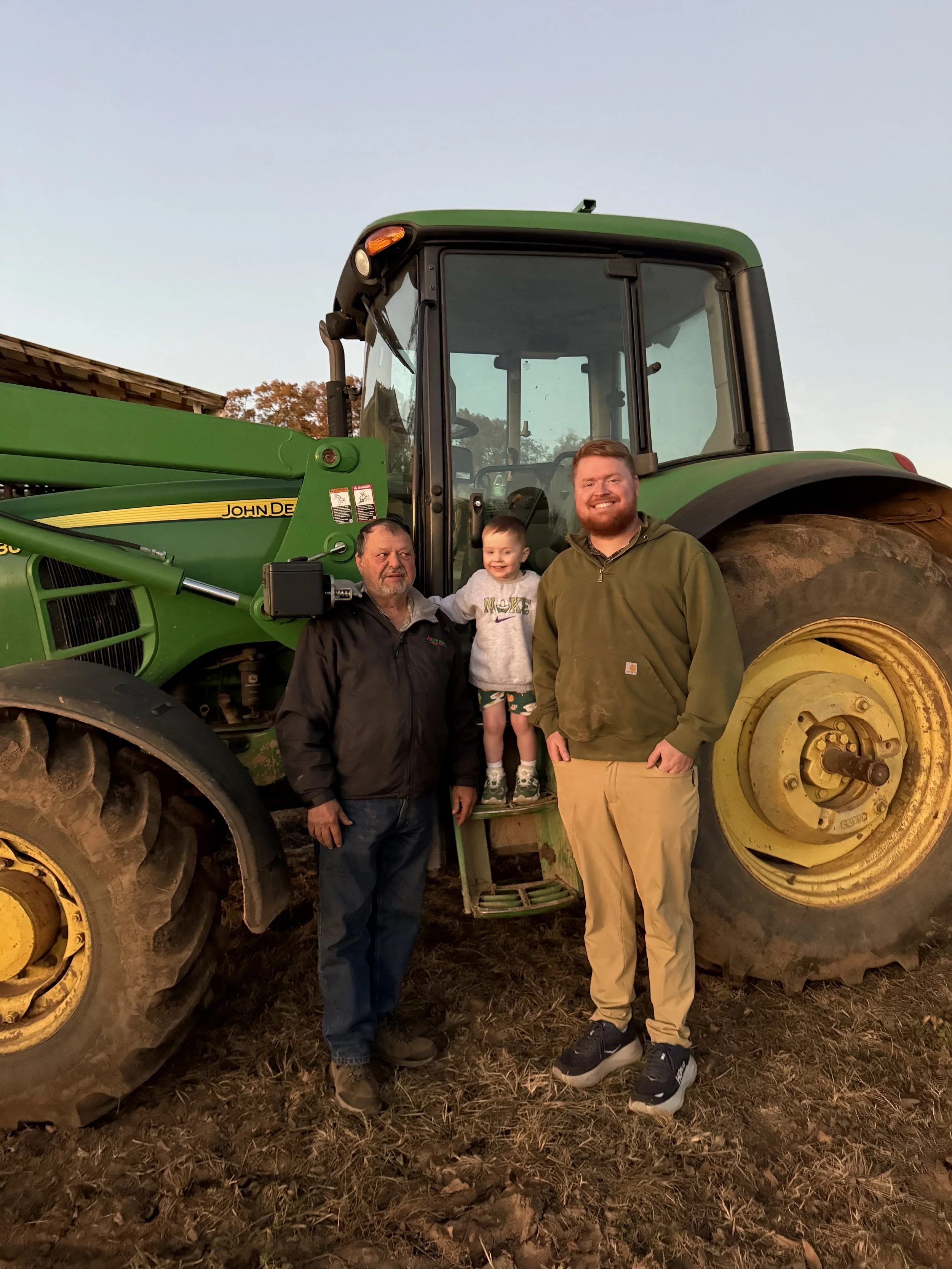
Robert Thompson with his son and grandson.
For Robert Thompson, farming in East Tennessee has always been about more than acres and yields. It’s been about people and planning ahead. As a fourth-generation farmer whose farming roots date back to 1883, Robert knows the importance of staying grounded in values and sustaining the land for generations to come.
In addition to serving as a board member of the Tennessee Corn Promotion Board, Robert was recently selected to serve a two-year term on the National Corn Growers Association Trade, Transportation, and Animal Agriculture Action Teams. Outside of these roles, he’s actively transitioning the farm to the next generation, offering a perspective many Tennessee farmers can relate to: how do you prepare the farm and the family for what comes next?
We sat down with Robert to talk about what succession planning specifically looks like for his family, and why it’s critical for preserving Tennessee farmland.
Q: Tell us about your farm, its history, and what your operation looks like today.
Robert:
I’m a fourth-generation family farmer. My great-grandfather started the farm in 1883 with 43 acres, and today we’re farming about 760 acres. Like most farms that have been around that long, we’ve grown and changed over time, and we’ve had setbacks along the way, too – that’s just part of it.
Today, the farm is very much a family operation. I’m 66, and my son is actively farming with us now. He also works an off-farm job, which is pretty common here in East Tennessee. That’s just the reality for a lot of farm families today.
I’ve also got a grandson who’s three years old and already running around on the farm, so hopefully we’ve got six generations in place. And we’ve got another grandchild on the way. That’s what really makes you start thinking long-term.
Q: When did you realize it was time to start succession planning?
Robert:
I saw my parents go through it with me, so I knew early on that those conversations have to start sooner rather than later. Succession planning isn’t something you do all at once. It’s a process that takes time.
You also have to be aware of what’s going on around you. The economic value of land, development pressure, and changes in tax laws all influence what’s possible. I’ve seen farms sell out entirely because the land became more valuable for something else, like an industrial park or an airport. Sometimes that money gets reinvested into other farms, and sometimes it doesn’t.
The key is having a vision for what you want the farm to look like years down the road.
Q: What does handing off responsibility look like on your farm?
Robert:
My son has taken the lead on agronomy and the row crop side of the operation. We’re storing grain this year, managing hay and straw, and running a cattle operation, so everything works hand in hand.
We raise a lot of hay and sell it to horse owners, goat producers, and sheep producers. During dry spells, we have people coming from North Carolina and North Georgia looking for hay. That diversification helps the operation.
I still have to sign the checks, but decision-making has gradually shifted. You have to give the next generation real responsibility to see how invested they are and help them grow into it.
Q: What have been the biggest challenges in succession planning?
Robert:
Figuring out the best way to transition things while taking care of everyone involved. Estate planning, trusts, and tax laws can be complicated, and they change over time.
My parents did a good job of planning ahead with attorneys and accountants, and that made a big difference. I’ve seen situations where farms had to sell off half their land just to pay inheritance taxes. Those are the kinds of things you want to avoid if you can.
Another part people don’t always think about is caring for aging parents. Succession planning isn’t just about land and equipment. It’s also about making sure someone is there to help when they’re needed, even for the small things.
Q: What has been the most rewarding part of planning?
Robert:
Seeing the enthusiasm younger generations have for agriculture. My son isn’t farming the exact same way I did, and I didn’t farm exactly like my dad did, and that’s okay.
Technology has changed a lot. We don’t rely on the plow like we used to. Equipment, seed technology, and conservation practices have improved how we farm and reduced erosion. It’s better for the environment and better for the land long-term.
I’m also part of a leadership program through the Tennessee Department of Agriculture, and even though I’m the oldest one in the group, the enthusiasm from the younger members is encouraging. Seeing how they think about agriculture helps me understand where the next generation is headed.
Q: How do succession planning and farmland preservation go hand in hand?
Robert:
What happens to farmland after a generation steps away matters. Development pressure is real, especially on high-quality farmland, and once that land is gone, it’s gone.
At the same time, you have to respect property rights. Farmers have worked their whole lives to build equity in their land, and those decisions matter. But there’s a balance there.
Succession planning influences what happens to the farmland, and what happens to the farmland affects all of us. Those things are tied together.
Q: What advice would you give to farm families just starting this process?
Robert:
Start with honest conversations as a family. Figure out what the next generation really wants. If they don’t want to farm, you need to think about leasing it out or finding the best way to transition the land.
There’s no one-size-fits-all answer. Some families want to preserve a farming legacy at all costs, and others decide to sell or develop. The important thing is to be intentional and not wait until you’re forced to make decisions.
Q: What are your hopes for the future of Tennessee corn farming?
Robert:
I’m optimistic. Through the Tennessee Corn Promotion Board, there’s a lot of work being done to create new opportunities and uses for corn. There’s research into new technologies, even equipment powered largely by ethanol, that could change the economics of farming again. Agriculture has always adapted, and I believe it will continue to do so.
Want more stories like this?
Get the latest Tennessee corn farmer features, updates, and insights delivered to your inbox. Sign up for our newsletter to stay connected with what’s growing at Tennessee Corn.
About the Tennessee Corn Promotion Board
The Tennessee Corn Promotion Board (TCPB) works on behalf of Tennessee’s corn farmers to invest checkoff dollars in research, market development, education, and promotion. Through these efforts, TCPB helps ensure a strong future for corn production across the state, while connecting the value of corn to consumers, livestock producers, and the industries that rely on it.